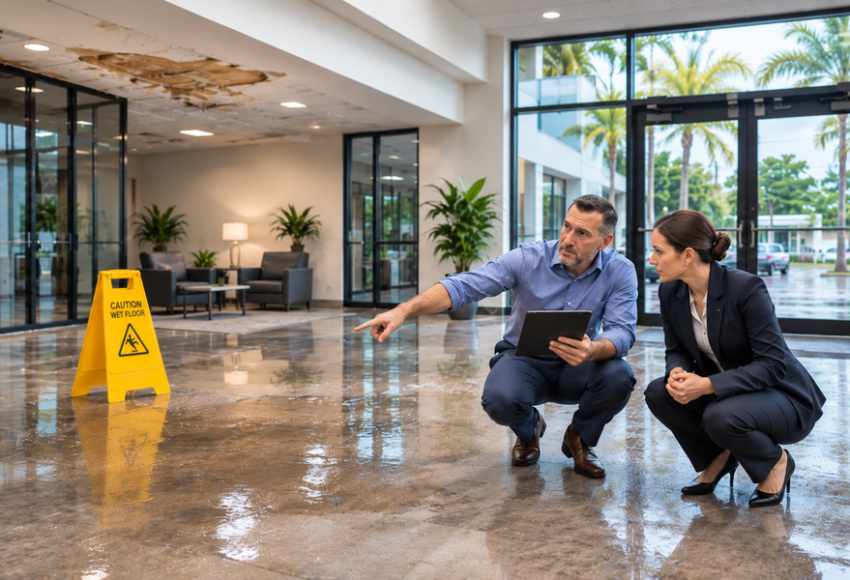
Water damage at a commercial property can come from very different sources, and the source can significantly affect how an insurance claim is evaluated. A commercial flood insurance claim may be handled differently from damage caused by a burst pipe, plumbing failure, roof opening, sewer backup, or another water-related event because different policies, exclusions, and endorsements may apply. Alpha Public Insurance Adjusters can review the loss alongside the applicable policy language and help business owners document the damage and understand the claim process.
Understanding flood vs water damage insurance can help business owners identify which policy may apply and what evidence should be preserved after the loss. At Alpha Public Insurance Adjusters, we help property owners make sense of complicated commercial claims and assess how the facts of a loss relate to the policy. This guide explains the key distinctions and practical steps to consider after water damages your property.
Why the Source of the Water Matters
“Water damage” is a broad description of harm caused by unwanted water. It is not necessarily a single coverage category in an insurance contract. A policy may cover some sudden and accidental water losses while excluding others, and it may define flood separately. The same wet floor, damaged inventory, or soaked wall can therefore lead to different claim outcomes depending on how the water arrived.
For example, a supply line that suddenly breaks inside a building may be treated as an accidental discharge of water. By contrast, surface water from heavy rain that accumulates around the property and enters through doors or openings may fall under a flood exclusion in a standard commercial property policy. A separate flood policy or specific endorsement may be needed for that type of loss.
These examples are general, not a guarantee of coverage. Policy definitions, endorsements, state law, the facts of the incident, and the timing of the damage can all affect how an insurer evaluates a claim. Businesses should review the policy definitions, exclusions, and endorsements rather than relying only on general terms such as “flood” or “water damage.”
What Is a Commercial Flood Insurance Claim?
A commercial flood insurance claim generally involves damage caused by a flood as defined by the applicable policy. Flood definitions often refer to a temporary condition involving the general and temporary inundation of normally dry land by water. The wording and requirements can vary, so the policy definition is essential.
Floodwater may come from heavy rainfall, overflowing rivers or streams, storm surge, or runoff that collects and enters a building. The precise source and path of the water should be documented. If flood coverage is provided by a separate policy, that policy will have its own coverage limits, deductibles, conditions, and claims process. Some commercial property policies also include limited flood coverage by endorsement, but the scope can differ significantly.
Common flood-related concerns for businesses
- Building damage: Floodwater can affect foundations, walls, flooring, electrical systems, and mechanical equipment.
- Contents and inventory: Stock, furniture, machinery, computers, and stored materials may be damaged or contaminated.
- Debris and cleanup: Removal, drying, sanitation, and disposal costs may be subject to specific policy terms or limits.
- Business interruption: A covered property loss may disrupt operations, but income coverage can depend on the policy and its requirements.
Reviewing the policy and loss documentation can help identify the coverage provisions and evidence relevant to a business flood damage claim.
What Is a Commercial Water Damage Insurance Claim?
A commercial water damage insurance claim may involve water from a source other than a policy-defined flood. Examples may include a sudden pipe rupture, an accidental discharge from a sprinkler system, or water escaping from certain plumbing or building systems. Whether a particular event is covered depends on the policy language and circumstances.
Some causes that appear straightforward can raise coverage questions. A roof leak, for instance, may involve a covered storm-created opening, wear and tear, deferred maintenance, or a combination of causes. A sewer backup may be excluded unless the policy includes a backup endorsement. Likewise, water from a damaged drain or sump system may be subject to specific policy terms.
Examples of water losses that need policy review
- A pipe breaks overnight and damages office equipment and interior finishes.
- A sprinkler line releases water after being struck during building work.
- Rain enters through a damaged roof, with questions about the condition of the roof and the cause of the opening.
- A sewer or drain backs up into a lower-level workspace.
- A leaking appliance or HVAC component damages nearby materials over time.
Sudden, accidental events may be treated differently from long-term seepage, repeated leakage, corrosion, or maintenance-related deterioration. Insurers may also distinguish between repairing the failed component and repairing the resulting damage.
Key Differences Between Flood and Other Water Losses
The practical difference is not simply whether water was present. It is the water’s source, how it entered the property, and how the policy classifies the event. A business may experience a combination of causes: for example, stormwater could enter through an opening while a separate plumbing line also fails. Each part of the damage may require its own investigation.
| Issue | Flood loss | Other water loss |
|---|---|---|
| Possible source | Surface water, runoff, overflow, or storm surge, depending on the policy definition | Plumbing, appliances, certain building systems, or other accidental releases |
| Potential policy | Separate flood policy, flood endorsement, or other applicable coverage | Commercial property policy and any relevant endorsements |
| Common coverage issue | Flood exclusion, definition, limits, deductible, or waiting period | Sudden versus gradual damage, maintenance exclusions, or backup limitations |
| Useful evidence | Water levels, flood conditions, entry points, and affected areas | Failed component, point of release, repair records, and damage timeline |
This comparison is a starting point, not a substitute for reviewing the contract. A policy may use specialized terms or impose conditions that change the analysis. When a loss has multiple contributing causes, the chronology and physical evidence can be important.
Exclusions, Endorsements, and Policy-Specific Limits
Insurance policies commonly contain exclusions and coverage conditions that affect water-related claims. A flood exclusion may apply under a commercial property policy unless flood coverage is added. Other policies may exclude or limit losses caused by sewer backup, sump overflow, gradual seepage, groundwater, wear and tear, or faulty maintenance. These provisions should be read alongside endorsements that may restore or modify coverage.
Review applicable coverage limits, sublimits, deductibles, exclusions, and endorsements together. Flood coverage may carry a separate deductible or a sublimit for certain property. A water backup endorsement may cap payment at a stated amount. Business income coverage can also have conditions related to the covered physical damage, the period of restoration, and any waiting period.
We recommend collecting the full policy package, including declarations, forms, and endorsements. The declarations page is useful, but it may not contain the definitions or exclusions that determine how a particular loss is handled. If the insurer cites an exclusion or limitation, ask for the specific policy language and an explanation of how it applies to the documented facts.
What to Do After Water Damages Your Business
Taking organized, reasonable steps after a loss can help protect people and property while preserving information for the claim. Safety comes first: avoid entering areas with electrical hazards, unstable structures, or contaminated water. Follow instructions from emergency responders and qualified restoration professionals.
- Prevent further damage when safe. Shut off water or power if appropriate, protect undamaged property, and arrange reasonable emergency measures. Keep receipts and records of work performed.
- Notify the insurer promptly. Follow the policy’s notice requirements and record when, how, and to whom notice was given.
- Document the scene. Photograph and video the water source, entry points, water levels, damaged areas, equipment, and contents before cleanup changes the scene, when it is safe to do so.
- Keep damaged items and records. Do not discard affected materials before documenting them and checking with the insurer or its representatives, unless health or safety requires immediate disposal.
- Track costs and disruption. Save invoices, payroll information, sales records, temporary operating costs, and other documents that may help explain the financial impact.
- Keep a claim log. Record conversations, inspections, requests, deadlines, and submitted documents in one place.
Documentation That Can Support a Commercial Claim
Good documentation connects the cause of the loss to the resulting damage and the costs claimed. Useful materials may include maintenance records, plumbing or contractor reports, weather information, photographs, inventory lists, repair estimates, and invoices. For a business interruption component, financial statements, tax records, sales data, and operational records may help explain normal performance and the effect of the shutdown.
Where the source is uncertain, avoid guessing or altering evidence unnecessarily. Note what was observed and when. A plumber, engineer, or restoration contractor may be able to document the point of failure or the path of water. Their findings can be useful, although the insurer will make its coverage decision under the policy and applicable rules.
How Alpha Public Insurance Adjusters Can Help
Commercial claims can involve overlapping causes, complex property valuations, multiple coverage sections, and extensive supporting records. At Alpha Public Insurance Adjusters, our role is to help policyholders understand the claim process, organize loss information, and present the damage and documentation for consideration. We can review the facts alongside the policy language and help identify questions that may need clarification.
Whether you are dealing with a flood-related loss or a plumbing failure, it can be helpful to request assistance early, especially when the source is disputed or the damage affects business operations. Explore our information on flood damage claims and water damage claims to learn more about the support available. Coverage depends on the applicable policy and facts of the loss, while organized documentation can support the claim review.
Take a Clear, Documented Approach
Knowing the distinction between flood and other water losses gives business owners a useful starting point, but the policy wording and evidence determine the details. Review your coverage before a loss if possible, understand which endorsements apply, and maintain records that describe your building, contents, and operations. After an incident, prioritize safety, provide prompt notice, and document the damage and response carefully.
Contact Alpha Public Insurance Adjusters to discuss the cause of loss, affected property, available documentation, and policy provisions that may affect your claim.
Frequently Asked Questions
Does a commercial property policy cover every type of water damage?
No. Coverage depends on the cause of the water, the policy’s definitions and exclusions, and any endorsements. Sudden plumbing failures, floodwater, sewer backup, and gradual leaks may be treated differently.
Can one incident involve both flood and water damage coverage?
It can. An event may involve more than one water source or a chain of damage. The policy terms and evidence will determine how each part is evaluated. Documenting the timing, source, and affected areas can be important.
Should we begin cleanup before the insurer inspects the property?
Do not delay necessary steps to protect people or prevent further damage. When safe, photograph and record conditions before cleanup, preserve relevant materials, and notify the insurer as soon as possible. Follow applicable policy requirements and keep records of emergency work.