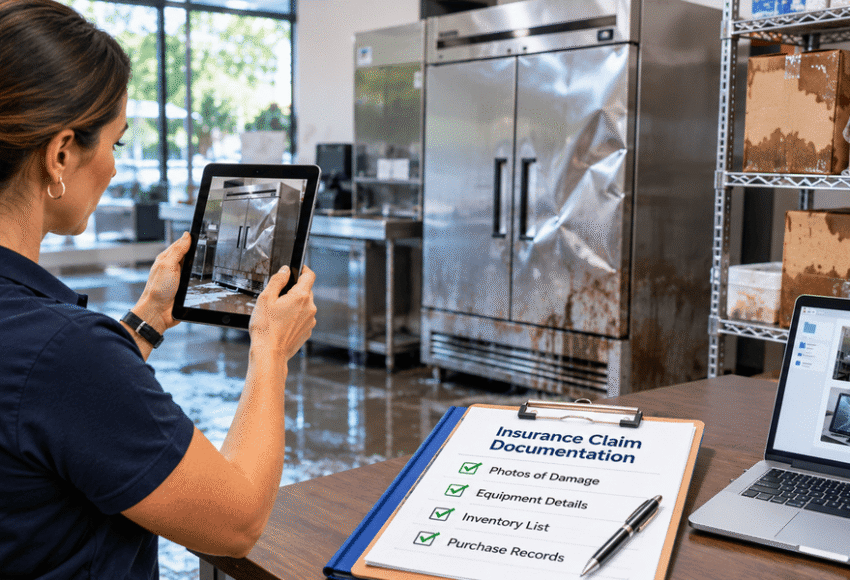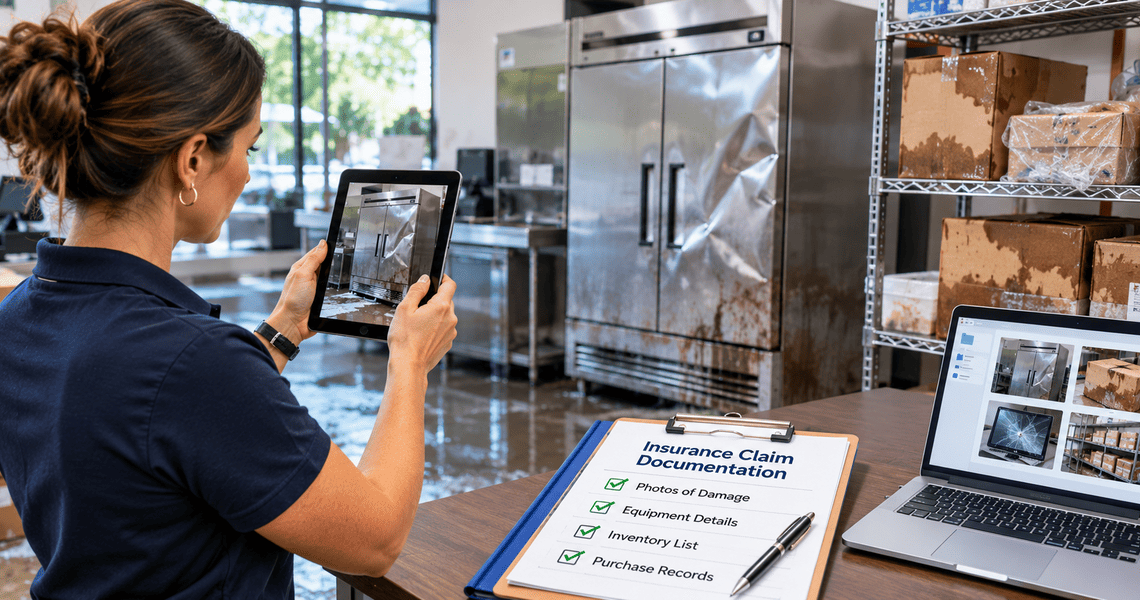
Damage to business equipment or inventory can interrupt operations while also creating a detailed insurance documentation process. For a business equipment insurance claim, businesses may need photographs, equipment and stock inventories, purchase records, repair estimates, replacement information, and records showing how the loss affected operations. Alpha Public Insurance Adjusters can help business owners document property damage and organize claim information according to the loss and applicable policy.
Good documentation helps connect the event to the damage and supports the amount you are claiming. A business equipment insurance claim may require photographs as well as ownership records, item inventories, repair estimates, and replacement information. You will want an organized record of what was affected, its condition before the incident, the cost to repair or replace it, and the way the loss has affected operations. The same careful approach can support a claim for damaged inventory or other business contents.
At Alpha Public Insurance Adjusters, we encourage businesses to approach property-loss records methodically. The guidance below explains practical steps for documenting equipment, stock, estimates, and operational impacts. Always check your own policy and follow instructions from your insurer or claims representative, since coverage, deadlines, and documentation requirements vary.
Start with safety and protect the evidence
Before inspecting property, make sure the premises are safe to enter. Follow instructions from emergency responders, building management, and qualified professionals. Do not operate wet electrical equipment, enter unstable areas, or handle chemicals and contaminated goods without appropriate guidance. Safety comes before preserving a claim record.
Once access is permitted, take reasonable steps to prevent further damage. Depending on the situation, that may mean arranging temporary repairs, moving unaffected stock away from water, or securing an opening. Contact your insurer promptly and keep receipts for necessary mitigation expenses. If an item must be moved, cleaned, or discarded for safety or operational reasons, photograph it first when it is safe to do so, and record why the action was necessary.
Do not assume you must wait for an inspection before taking urgent protective measures. However, avoid permanent repairs or disposing of damaged property until you confirm the insurer’s requirements, unless safety or other urgent circumstances require it. Keep a written note of who you contacted, when you contacted them, and any directions you received.
Create a clear record of damaged business equipment
Build an equipment inventory
Prepare a list of each damaged or potentially affected item. Be specific: “office computer” is less useful than “Dell desktop computer, model number, serial number, used by the accounts team.” Include items such as production machinery, computers, point-of-sale systems, refrigeration units, tools, furniture, and business-specific equipment. If equipment is leased or financed, note that as well.
A practical inventory can include:
- Item description, manufacturer, model, and serial or asset number.
- Location before and after the incident, if it was moved.
- Approximate purchase date, original price, and supplier.
- Condition and maintenance history before the loss.
- Visible damage, symptoms, and whether the item can still be used.
- Repair status, repair estimate, and potential replacement cost.
Give each item a reference number and use that number in your photographs, receipts, estimates, and notes. This small step makes it easier to connect supporting documents to the right equipment, especially when many items were affected at once.
Take useful photographs and video
Photograph the overall scene first, then take closer images of each item and the specific damage. Wide views can show where equipment was located and how the event affected the space; close-ups can show water lines, impact damage, corrosion, smoke residue, broken components, or damaged labels. Include serial numbers and nameplates where they are readable. Take photographs from several angles and avoid editing or altering the original files.
Keep original image files with their dates and metadata where possible. Add a simple caption or separate log describing what each image shows. For example: “E-014, packaging machine, east production area, water exposure observed on 18 October.” Video can provide useful context, but it should complement, not replace, clear still photographs and a written inventory.
Support the value of equipment with records and estimates
Purchase invoices, receipts, bank statements, asset registers, tax records, warranty documents, maintenance logs, and prior photographs can help establish what you owned and its condition before the loss. If a receipt is missing, look for a supplier account history, email confirmation, financing paperwork, or bookkeeping entry. If a record is unavailable, note that limitation rather than estimating a date or value without support.
Ask a qualified repair provider to inspect damaged equipment and prepare a written estimate. A helpful estimate identifies the item, describes the observed problem, lists the work and parts required, and states whether repair is practical. It should also clarify whether the equipment was tested and whether hidden damage may become apparent after disassembly. If repair is not viable, ask the provider to explain why.
Replacement research is useful when an item cannot reasonably be repaired. Compare like-for-like models and document whether a suitable replacement is available. Newer equipment may have different capacity, features, or efficiency, so explain material differences rather than treating a more advanced model as equivalent. Keep quotations, product specifications, and supplier availability information together.
A commercial equipment damage claim may involve more than the purchase price. The applicable policy may use specific valuation terms, limits, deductibles, depreciation rules, or conditions for replacement. Do not assume that retail replacement cost, book value, or an old invoice alone determines the settlement. Review the policy language and ask the insurer what valuation evidence it needs.
Document damaged inventory and stock carefully
Inventory claims may require additional records because stock levels change through sales, purchases, returns, and replenishment. For a damaged inventory business equipment insurance claim, create a separate list of affected products, raw materials, work in progress, packaging, and supplies. Record descriptions, product codes, quantities, unit costs, and the location where the goods were stored.
Use stock-management reports, invoices, purchase orders, sales records, warehouse logs, and recent stock counts to establish what was on hand before the incident. If counts are incomplete, explain the method used to estimate quantities and retain the underlying records. Avoid relying on a single total when item-level detail is available.
Photograph damaged goods in their original location before sorting them, when it is safe and practical. Record whether items are wet, contaminated, burned, broken, spoiled, or otherwise unsaleable. Separate affected stock from undamaged goods and label it clearly, while following health, safety, and disposal rules. If some goods can be cleaned, reconditioned, or sold at a reduced price, document their condition and any resulting costs or proceeds. Do not describe all stock as a total loss unless that is supported by the facts.
Stock records can also help distinguish damaged goods from ordinary shrinkage, seasonal changes, or products already sold. Keep a timeline of when the inventory was last counted, when the incident occurred, and when the damage was discovered. This context can make a stock calculation easier to review.
Connect the contents claim to the policy and the facts
A commercial property contents claim may include business-owned equipment, furniture, tools, and inventory, but coverage depends on the policy, the cause of loss, the property involved, and any exclusions or limits. A policy may treat buildings, contents, stock, tenant improvements, and electronic equipment differently. Check definitions, endorsements, deductibles, sublimits, and notice requirements rather than assuming coverage applies.
Business property damage insurance can also include conditions about protecting property, documenting loss, cooperating with an investigation, or submitting a proof of loss by a specified deadline. Keep copies of the policy, claim correspondence, submitted forms, and supporting evidence. If a requirement is unclear, ask for clarification in writing so you have a record of the response.
Explain the operational impact of the damage
Equipment and inventory losses often affect revenue and workflow beyond the value of the physical items. Record when operations stopped or changed, which teams or services were affected, and what temporary arrangements were made. Examples include renting substitute equipment, outsourcing production, relocating stock, paying for emergency repairs, or working reduced hours.
Keep dated receipts and invoices for these expenses, along with notes explaining why each cost was necessary. Track repair timelines, delivery delays, lost production capacity, canceled orders, and customer service interruptions where relevant. Financial records such as sales reports, payroll information, and production logs may help show the business impact, but the insurer will determine what is relevant to the particular coverage. Document physical damage and operational losses separately because coverage for damaged property does not automatically establish coverage for lost income or other business-interruption losses.
Organize your claim file and keep a timeline
Use a shared, backed-up folder with clearly named files. A straightforward structure might include incident records, photos, equipment inventory, stock inventory, purchase documents, repair estimates, temporary expenses, and insurer communications. Maintain a master spreadsheet that links each item to its evidence and current status, such as “inspection pending,” “estimate received,” or “repaired.” Restrict access to sensitive business and customer information.
Keep a dated claim diary. Record inspections, calls, emails, questions, decisions, and next steps. After an important conversation, send a brief email confirming your understanding. A dated claim log can help the team track insurer requests, submitted records, outstanding questions, and applicable deadlines.
Common documentation mistakes to avoid
- Discarding damaged items before photographing them or confirming whether inspection is needed.
- Submitting a lump-sum estimate without item descriptions, quantities, or supporting records.
- Confusing original purchase price, current book value, and replacement cost.
- Including unaffected property without clearly separating it from damaged items.
- Making permanent repairs before recording the damage, except where urgency or safety makes them necessary.
- Overlooking leased property, temporary replacement costs, or stock that can be salvaged.
- Missing insurer requests because communications and documents are scattered across different people or devices.
Prepare a well-supported claim with care
A thorough claim file does not guarantee a particular outcome, but it gives the insurer clearer information to evaluate. Start with safety, notify the insurer, photograph the scene, list every affected item, gather ownership and value records, and obtain detailed repair or replacement estimates. For stock, reconcile damaged quantities against reliable business records. Then document mitigation expenses and operational effects as they develop.
Commercial property claims may involve policy terms, valuation provisions, documentation requirements, and deadlines that need to be reviewed alongside the loss. If you need help understanding the process or organizing property-loss information, you can learn more about Alpha Public Insurance Adjusters and the support available to businesses. With consistent records and clear communication, you can make the facts of your loss easier to understand and keep your recovery efforts organized.
Dealing with damaged equipment, inventory, or other business property after a loss? Contact Alpha Public Insurance Adjusters about documenting the damage, organizing equipment and stock records, reviewing repair or replacement estimates, and understanding the applicable policy terms.